
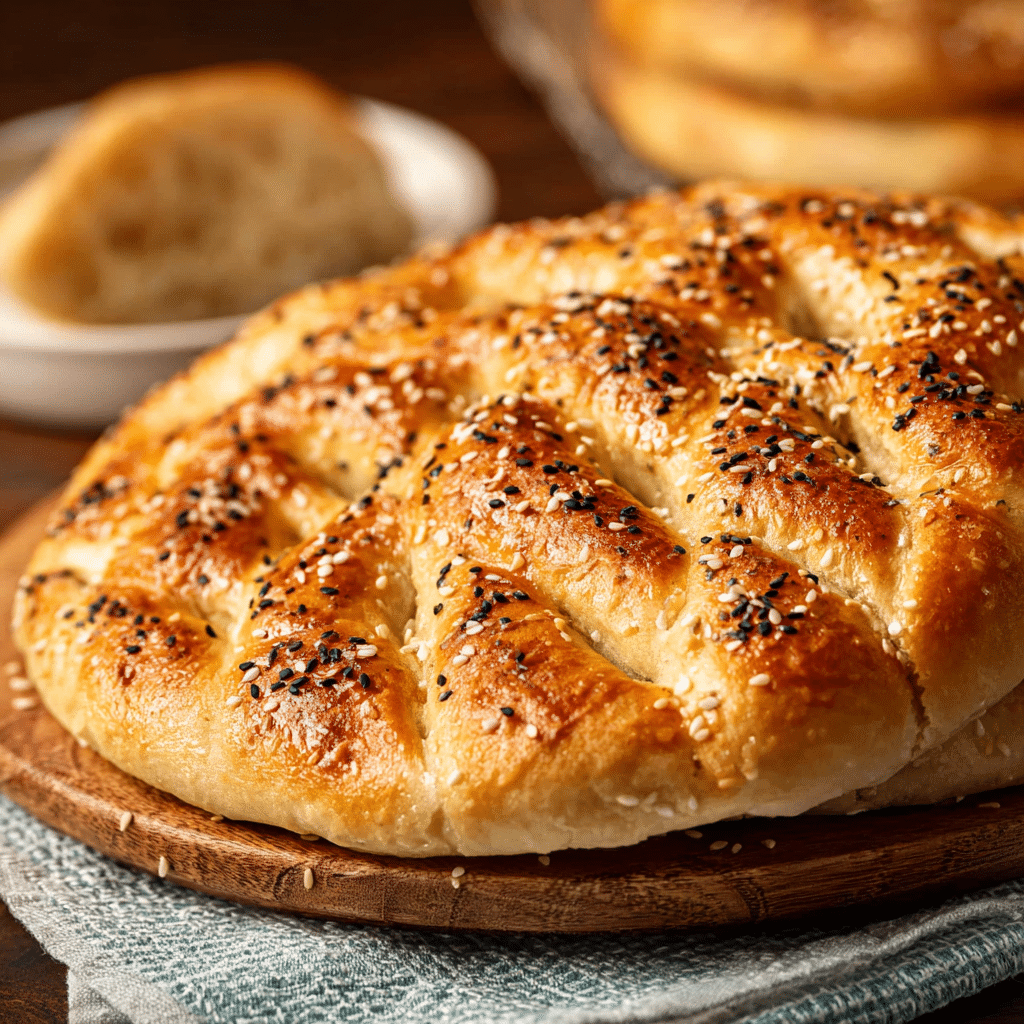
If you’ve never experienced the warm, soft, and slightly chewy texture of Turkish Bread, you’re missing out on one of the most delightful traditional breads that effortlessly enhances any meal. Turkish Bread, known for its unique texture and rich, authentic flavors, carries a deep culinary heritage. Whether you’re dipping it into savory sauces, using it for sandwiches, or simply enjoying it straight from the oven, this bread offers an unbeatable combination of taste and versatility that makes it a must-try for food lovers everywhere.
Why You’ll Love This Recipe
- Authentic Taste: Turkish Bread boasts a distinct flavor that perfectly balances a mild tanginess with a gentle sweetness, making every bite memorable.
- Unique Texture: The bread has a soft, airy crumb with a slightly chewy crust that creates a satisfying mouthfeel.
- Simple & Natural Ingredients: Made with basic pantry staples, Turkish Bread lets the natural flavors shine without any artificial additives.
- Versatility: Ideal for dipping, sandwiches, or as a side, it elevates any meal effortlessly.
- Easy to Make at Home: With straightforward steps, even novice bakers can master this recipe and impress their families.
Ingredients You’ll Need
The beauty of Turkish Bread lies in its simplicity. Each ingredient plays a vital role in creating that perfect balance of flavor, texture, and rich color that defines this recipe.
- All-purpose flour: Provides the base and structure for your bread, allowing it to rise beautifully.
- Warm water: Activates the yeast for proper fermentation and helps develop the dough’s soft crumb.
- Yeast: The magic behind the rise, ensuring your bread becomes fluffy and airy.
- Sugar: Adds a subtle sweetness that complements the natural yeast flavor and promotes browning.
- Salt: Enhances overall flavor and strengthens the gluten network.
- Olive oil: Contributes to a tender texture and introduces a slight fruity aroma typical of Mediterranean bread.
- Optional sesame or nigella seeds: Sprinkle on top to add crunch and an aromatic finish.
Variations for Turkish Bread
You can easily customize Turkish Bread to match your taste or dietary preferences. Trying out these variations lets you enjoy this classic in fresh and exciting ways.
- Whole wheat Turkish Bread: Swap half of the all-purpose flour with whole wheat for a nuttier flavor and added fiber.
- Herbed Turkish Bread: Mix finely chopped fresh herbs like rosemary or thyme into the dough for an aromatic twist.
- Garlic-infused Turkish Bread: Add minced garlic to the dough or brush the top with garlic butter before baking for savory depth.
- Gluten-free adaptation: Use a gluten-free flour blend and adjust liquid ratios to accommodate dietary needs.
- Stuffed Turkish Bread: Fill dough with cheese or spiced ground meat before baking for a deliciously hearty option.

How to Make Turkish Bread
Step 1: Prepare the Yeast Mixture
Begin by combining warm water with sugar and yeast in a small bowl. Allow it to sit for 5 to 10 minutes until it becomes frothy, indicating the yeast is active and ready to work its magic.
Step 2: Mix the Dough
In a large mixing bowl, combine the flour and salt. Slowly pour in the yeast mixture along with olive oil. Stir until the ingredients start to come together into a rough dough.
Step 3: Knead the Dough
Transfer the dough onto a floured surface and knead vigorously for about 8 to 10 minutes. This develops the gluten, making your Turkish Bread soft yet structured.
Step 4: Let the Dough Rise
Place the dough in a lightly oiled bowl, cover it with a clean towel, and let it rise at room temperature for 1 to 1.5 hours until it doubles in size.
Step 5: Shape the Bread
Once risen, punch the dough down gently and shape it into a round or oval loaf. If you like, brush the surface with olive oil and sprinkle sesame or nigella seeds on top.
Step 6: Final Proofing
Allow the shaped dough to rest and rise for another 30 minutes, ensuring a light and airy crumb.
Step 7: Bake to Perfection
Bake in a preheated oven at 425°F (220°C) for 20 to 25 minutes or until the bread turns golden brown and sounds hollow when tapped on the bottom.
Pro Tips for Making Turkish Bread
- Use warm, not hot, water: Water that’s about body temperature activates yeast without killing it.
- Knead thoroughly: Proper gluten development is key for the bread’s soft yet chewy texture.
- Let the dough rise in a warm spot: Consistent warmth helps create a light, fluffy bread.
- Brush with olive oil before baking: This adds a beautiful shine and enhances flavor.
- Don’t overload with toppings: A light sprinkle of seeds adds crunch without overpowering the bread’s natural taste.
- Use a pizza stone or baking steel: It helps achieve a crisp crust similar to traditional ovens.
How to Serve Turkish Bread
Garnishes
Top Turkish Bread with sesame or nigella seeds before baking for a nutty aroma and beautiful appearance. You can also finish with a drizzle of olive oil and sprinkle fresh herbs after baking for added freshness.
Side Dishes
Serve Turkish Bread alongside dips like baba ganoush, hummus, or tzatziki to soak up every flavorful bite. It pairs wonderfully with Mediterranean and Middle Eastern spreads, as well as hearty stews or grilled meats.
Creative Ways to Present
Slice Turkish Bread into thick wedges, grill or toast them for an irresistible crunch, then top with garlic butter or melted cheese for a savory snack. Alternatively, use it as the base for sandwich-style dishes filled with meats, veggies, and spreads.
Make Ahead and Storage
Storing Leftovers
Keep leftover Turkish Bread tightly wrapped in aluminum foil or stored in an airtight container at room temperature for up to two days to maintain freshness and softness.
Freezing
Wrap the bread tightly in plastic wrap and then foil before freezing. It will keep well for up to 3 months, preserving texture and flavor for later indulgence.
Reheating
Reheat frozen or day-old Turkish Bread in a warm oven at 350°F (175°C) for 10–12 minutes or until soft and fragrant again. Avoid microwaving, which can make the bread chewy or rubbery.
FAQs
What makes Turkish Bread different from other breads?
Turkish Bread is uniquely characterized by its soft, airy texture and thin, slightly chewy crust, often topped with aromatic seeds, all achieved through a simple ingredient list and specific preparation techniques.
Can I make Turkish Bread without a stand mixer?
Absolutely! This bread is traditionally hand-kneaded, and while a stand mixer speeds things up, kneading by hand develops the gluten just as effectively.
Is Turkish Bread suitable for sandwiches?
Yes, its soft yet sturdy crumb makes it excellent for sandwiches, holding fillings well without falling apart.
Can I replace olive oil with other oils?
While olive oil is recommended for its flavor and aroma, you can substitute with vegetable or sunflower oil if needed, though it will slightly alter the taste.
How long does Turkish Bread stay fresh?
Freshly baked Turkish Bread stays soft for up to two days at room temperature when stored properly, but freezing extends its shelf life substantially.
Final Thoughts
Turkish Bread is more than just a staple; it’s a delightful experience that brings a touch of authentic Turkish flavor into your kitchen. Easy to make, wonderfully versatile, and irresistibly tasty, it’s a perfect addition to your bread repertoire. Give this recipe a try and watch how quickly it becomes a beloved favorite around your table!
Related Posts
Print
Turkish Bread
- Total Time: 2 hours
- Yield: 1 round or oval loaf (serves 6-8) 1x
- Diet: Contains Gluten
Description
Turkish Bread is a traditional, soft, and slightly chewy bread known for its mild tangy and sweet flavor, airy crumb, and thin crust topped with aromatic seeds. Made with simple pantry ingredients like flour, yeast, and olive oil, this versatile bread is perfect for dipping, sandwiches, or as a side to a variety of meals. Easy to prepare at home, it offers an authentic taste of Turkish culinary heritage and pairs wonderfully with Mediterranean dishes.
Ingredients
Main Ingredients
- 3 ½ cups (440g) all-purpose flour
- 1 ¼ cups (300ml) warm water (about body temperature)
- 2 ¼ tsp (one packet) active dry yeast
- 1 tbsp sugar
- 1 ½ tsp salt
- 3 tbsp olive oil, plus extra for brushing
Optional Toppings
- 1 tbsp sesame seeds or nigella seeds
Instructions
- Prepare the Yeast Mixture: In a small bowl, combine warm water, sugar, and yeast. Let it sit for 5 to 10 minutes until frothy, indicating the yeast is activated.
- Mix the Dough: In a large mixing bowl, whisk together the flour and salt. Gradually pour in the yeast mixture and olive oil, stirring until a rough dough forms.
- Knead the Dough: Transfer the dough to a floured surface and knead vigorously for 8 to 10 minutes until smooth and elastic, developing the gluten.
- Let the Dough Rise: Place the dough in a lightly oiled bowl, cover with a clean towel, and let it rise in a warm place for 1 to 1.5 hours until doubled in size.
- Shape the Bread: Gently punch down the dough, shape it into a round or oval loaf, then brush the surface lightly with olive oil. Sprinkle with sesame or nigella seeds if desired.
- Final Proofing: Allow the shaped dough to rest and rise for 30 minutes more to achieve a light, airy crumb.
- Bake to Perfection: Preheat the oven to 425°F (220°C). Bake the bread on a pizza stone or baking tray for 20 to 25 minutes until golden brown and hollow-sounding when tapped on the bottom.
Notes
- Use warm water (about body temperature) to activate yeast without killing it.
- Knead thoroughly for gluten development, which ensures the bread’s soft yet chewy texture.
- Let the dough rise in a consistently warm spot to produce a light, fluffy bread.
- Brushing with olive oil before baking adds shine and enhances flavor.
- Use a light sprinkle of seeds for crunch without overpowering the bread.
- Using a pizza stone or baking steel helps create a crisp crust similar to traditional ovens.
- Prep Time: 15 minutes
- Cook Time: 20-25 minutes
- Category: Appetizers
- Method: Baking
- Cuisine: Turkish
Nutrition
- Serving Size: 1 slice (about 60g)
- Calories: 150
- Sugar: 1.5g
- Sodium: 280mg
- Fat: 4g
- Saturated Fat: 0.5g
- Unsaturated Fat: 3g
- Trans Fat: 0g
- Carbohydrates: 25g
- Fiber: 1g
- Protein: 4g
- Cholesterol: 0mg
Keywords: Turkish bread, traditional bread, homemade bread, soft bread, Mediterranean bread, flatbread, yeast bread