
Discover the rich, spicy taste of Authentic Korean Kimchi Jjigae with this easy, flavorful recipe guide for a perfect homemade stew. This beloved Korean comfort food combines tangy, fermented kimchi with tender pork, tofu, and a savory broth to create a warm and hearty dish that’s perfect anytime you crave something bold and satisfying. Whether you’re new to Korean cooking or looking to master a classic stew, this guide walks you through all the steps to make an amazing pot of kimchi jjigae right in your own kitchen.
Why You’ll Love This Recipe
- Rich Tradition: Experience a genuine Korean stew with roots deeply embedded in vibrant local flavors.
- Simple Ingredients: Uses common pantry staples yet delivers a complex, satisfying taste.
- Comforting Warmth: Perfect for chilly days when you want a hearty and spicy meal to warm your soul.
- Versatile and Adaptable: Easy to customize with proteins or vegetables you prefer or have on hand.
- Quick to Make: Ready in under an hour, making it doable for weeknight dinners without fuss.
Ingredients You’ll Need
These ingredients are both simple and essential, each contributing unique flavors, textures, and the iconic spicy kick that defines authentic Korean kimchi jjigae. Gathering these basics will set you up for a fantastic stew that tastes like it’s been simmering for hours.
- Kimchi: The star of the dish, well-fermented and preferably with some kimchi juice to deepen the flavor.
- Pork Belly or Shoulder: Adds rich, savory fat and tender texture, but you can substitute with tofu for a vegetarian option.
- Tofu: Silken or firm tofu adds smoothness and balances the heat in the stew.
- Onions and Garlic: Build foundational sweetness and pungency to round out the broth.
- Gochugaru (Korean Red Chili Flakes): Provides smoky heat and enhances the stew’s vibrant red color.
- Gochujang (Korean Chili Paste): Adds depth, sweetness, and layers of spice to the broth.
- Dashi or Anchovy Broth: A savory base that’s traditional and umami-rich to complement the kimchi’s tang.
- Scallions: Fresh green contrast and a subtle sharpness at the end.
- Soy Sauce or Fish Sauce: For seasoning and savory complexity.
Variations for Authentic Korean Kimchi Jjigae
Feel free to make the recipe your own! Authentic Korean Kimchi Jjigae is flexible and easy to tweak based on what you have or your dietary preferences, allowing you to create a stew that’s perfectly matched to your tastes.
- Seafood Twist: Add shrimp or clams for a briny, ocean-inspired flavor.
- Vegetarian Version: Swap pork with mushrooms or extra tofu and use vegetable broth instead of anchovy broth.
- Extra Heat: Increase gochugaru or add fresh sliced chili peppers for a fiery kick.
- Richer Broth: Stir in a spoonful of sesame oil or a handful of radish for an earthy dimension.
- Noodle Addition: Toss in glass noodles or instant ramen at the end for a filling, chewy texture.
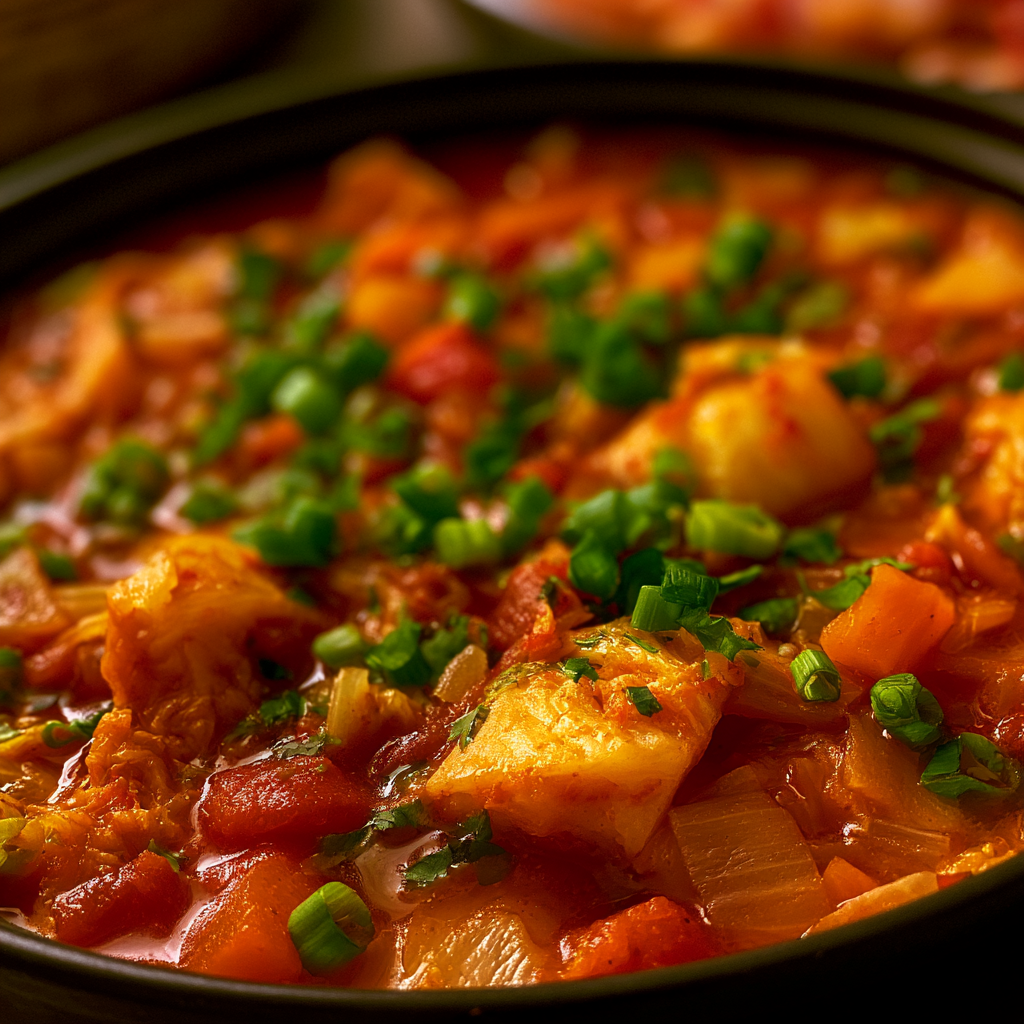
How to Make Authentic Korean Kimchi Jjigae
Step 1: Prepare the Broth and Ingredients
Start by making your broth, ideally a homemade anchovy and kelp stock or a store-bought dashi. Chop your kimchi into bite-sized pieces, slice pork into thin strips, and cube your tofu. This prep will ensure smooth cooking and even flavor distribution.
Step 2: Sauté the Aromatics and Pork
Heat a pot over medium flame. Add the pork and cook until it begins to brown and render fat. Toss in sliced onions and minced garlic, stirring until fragrant and translucent, providing a savory foundation for the stew.
Step 3: Add Kimchi and Seasonings
Mix in the kimchi with its juices, followed by gochugaru and gochujang. Stir everything well so the chili pastes coat the ingredients and release their spicy aromas—this is where the stew starts to take shape.
Step 4: Pour in Broth and Simmer
Pour your prepared broth into the pot, enough to cover the ingredients. Bring to a boil, then reduce to a simmer for 20-30 minutes, allowing the flavors to meld fully and the kimchi to soften.
Step 5: Add Tofu and Finish
Gently add tofu cubes and simmer for another 5-7 minutes. Adjust the seasoning with soy sauce or fish sauce if needed. Sprinkle chopped scallions just before serving to add a fresh pop of color and flavor.
Pro Tips for Making Authentic Korean Kimchi Jjigae
- Use Well-Fermented Kimchi: Older, ripe kimchi gives the stew a deeper flavor and signature tanginess.
- Layer Flavors Slowly: Sauté ingredients in stages to build complexity in the broth.
- Don’t Overcook Tofu: Add tofu near the end to keep it intact and creamy.
- Customize Heat Level: Modify gochugaru and gochujang amounts based on your spice tolerance.
- Serve Hot: Kimchi jjigae tastes best piping hot; leftovers can reheat well but fresh is always better.
How to Serve Authentic Korean Kimchi Jjigae
Garnishes
Fresh chopped scallions, a sprinkle of toasted sesame seeds, or thinly sliced fresh chili peppers add a burst of freshness and a visually appealing finish.
Side Dishes
Traditionally served alongside steamed white rice and a variety of banchan (small side dishes) like pickled vegetables, seasoned spinach, or mung bean sprouts, these sides help balance the spicy and bold stew.
Creative Ways to Present
Serve kimchi jjigae in individual stone bowls to retain heat longer, or pour it over steamed rice for a comforting one-bowl meal. For a modern twist, pair it with crispy Korean fried chicken or use it as a flavorful base for a hot pot party.
Make Ahead and Storage
Storing Leftovers
Allow the stew to cool completely before transferring to an airtight container. Keep refrigerated and consume within three days for best taste and safety.
Freezing
Kimchi jjigae freezes well when stored properly; freeze in portion-sized containers and thaw overnight in the fridge before reheating to preserve texture.
Reheating
Reheat gently on the stove over medium heat, stirring occasionally. Avoid microwaving for long to maintain tofu texture and prevent uneven heating.
FAQs
Can I make Authentic Korean Kimchi Jjigae vegetarian?
Yes! Substitute the pork with mushrooms or extra tofu and use vegetable broth instead of anchovy or dashi broth for a delicious vegetarian-friendly version.
What type of kimchi is best for kimchi jjigae?
Well-fermented, sour kimchi with more juice is ideal as it brings a sharp tang and deep flavor that’s essential for an authentic stew.
How spicy is Authentic Korean Kimchi Jjigae?
The level of spice can be adjusted by changing the amount of gochugaru and gochujang; traditionally, it has a moderate to high spiciness, but you can tailor it to your palate.
Can I use other meats instead of pork?
Definitely! Beef or chicken can be used as alternatives, though pork belly remains traditional for its rich flavor and fat content.
Is kimchi jjigae gluten-free?
Kimchi jjigae can be gluten-free if you choose gluten-free soy sauce and ensure the gochujang doesn’t contain wheat, as some varieties do contain gluten.
Final Thoughts
Authentic Korean Kimchi Jjigae is more than just a stew; it’s a hearty, flavorful embrace in a bowl that brings the vibrant taste of Korea right to your kitchen. Don’t hesitate to dive in, experiment with variations, and enjoy every delicious spoonful of this classic dish that’s as comforting as it is exciting. Happy cooking!
Related Posts
Print
Authentic Korean Kimchi Jjigae
- Total Time: 50 minutes
- Yield: 4 servings 1x
- Diet: Gluten Free
Description
Authentic Korean Kimchi Jjigae is a rich and spicy traditional stew made with well-fermented kimchi, tender pork belly or shoulder, tofu, and a savory dashi or anchovy broth. This comforting dish delivers bold, tangy flavors balanced by aromatic garlic, onions, and Korean chili pastes, perfect for warming you on chilly days or for a satisfying weeknight meal. Easy to customize with various proteins or vegetables, this recipe guides you through each step to create a deeply flavorful and hearty stew at home.
Ingredients
Main Ingredients
- 2 cups well-fermented kimchi with kimchi juice
- 200g pork belly or shoulder, sliced thinly (substitute with tofu for vegetarian option)
- 150g silken or firm tofu, cubed
- 1 medium onion, sliced
- 3 cloves garlic, minced
- 1 tablespoon gochugaru (Korean red chili flakes)
- 1 tablespoon gochujang (Korean chili paste)
- 4 cups dashi or anchovy broth
- 2 scallions, chopped
- 1 tablespoon soy sauce or fish sauce, to taste
Optional Variations and Additions
- Shrimp or clams for a seafood twist
- Mushrooms or extra tofu for vegetarian version
- Fresh sliced chili peppers for extra heat
- 1 teaspoon sesame oil or a handful of radish for richer broth
- Glass noodles or instant ramen for noodle addition
Instructions
- Prepare the Broth and Ingredients: Start by making your broth, ideally using homemade anchovy and kelp stock or store-bought dashi. Chop the kimchi into bite-sized pieces, slice the pork into thin strips, and cube the tofu. This preparation ensures smooth cooking and even flavor distribution.
- Sauté the Aromatics and Pork: Heat a pot over medium flame. Add the pork and cook until it begins to brown and render fat. Then add the sliced onions and minced garlic, stirring until fragrant and translucent to build a savory base for the stew.
- Add Kimchi and Seasonings: Mix in the kimchi along with its juices, followed by gochugaru and gochujang. Stir everything well so the chili pastes coat the ingredients and release their spicy aromas, allowing the stew to start developing its signature flavor.
- Pour in Broth and Simmer: Pour the prepared broth into the pot until it just covers the ingredients. Bring to a boil, then reduce heat and simmer gently for 20-30 minutes, giving time for the flavors to meld fully and the kimchi to soften.
- Add Tofu and Finish: Gently add the tofu cubes and continue to simmer for another 5-7 minutes. Adjust seasoning by adding soy sauce or fish sauce as needed. Just before serving, sprinkle with fresh chopped scallions to add a bright pop of color and flavor.
Notes
- Use well-fermented kimchi for deeper, authentic flavor and signature tanginess.
- Layer flavors slowly by sautéing ingredients in stages to build a complex broth.
- Add tofu near the end to keep it intact and creamy.
- Adjust the amount of gochugaru and gochujang to modify spice level according to taste.
- Serve kimchi jjigae piping hot for the best experience; leftovers reheat well but fresh is preferable.
- Prep Time: 15 minutes
- Cook Time: 35 minutes
- Category: Main Course
- Method: Simmering
- Cuisine: Korean
Nutrition
- Serving Size: 1 bowl (approx. 300g)
- Calories: 280 kcal
- Sugar: 4g
- Sodium: 900mg
- Fat: 18g
- Saturated Fat: 5g
- Unsaturated Fat: 11g
- Trans Fat: 0g
- Carbohydrates: 12g
- Fiber: 3g
- Protein: 15g
- Cholesterol: 40mg
Keywords: kimchi jjigae, Korean stew, kimchi stew, spicy Korean soup, comfort food, pork kimchi stew, tofu stew, authentic Korean recipe