
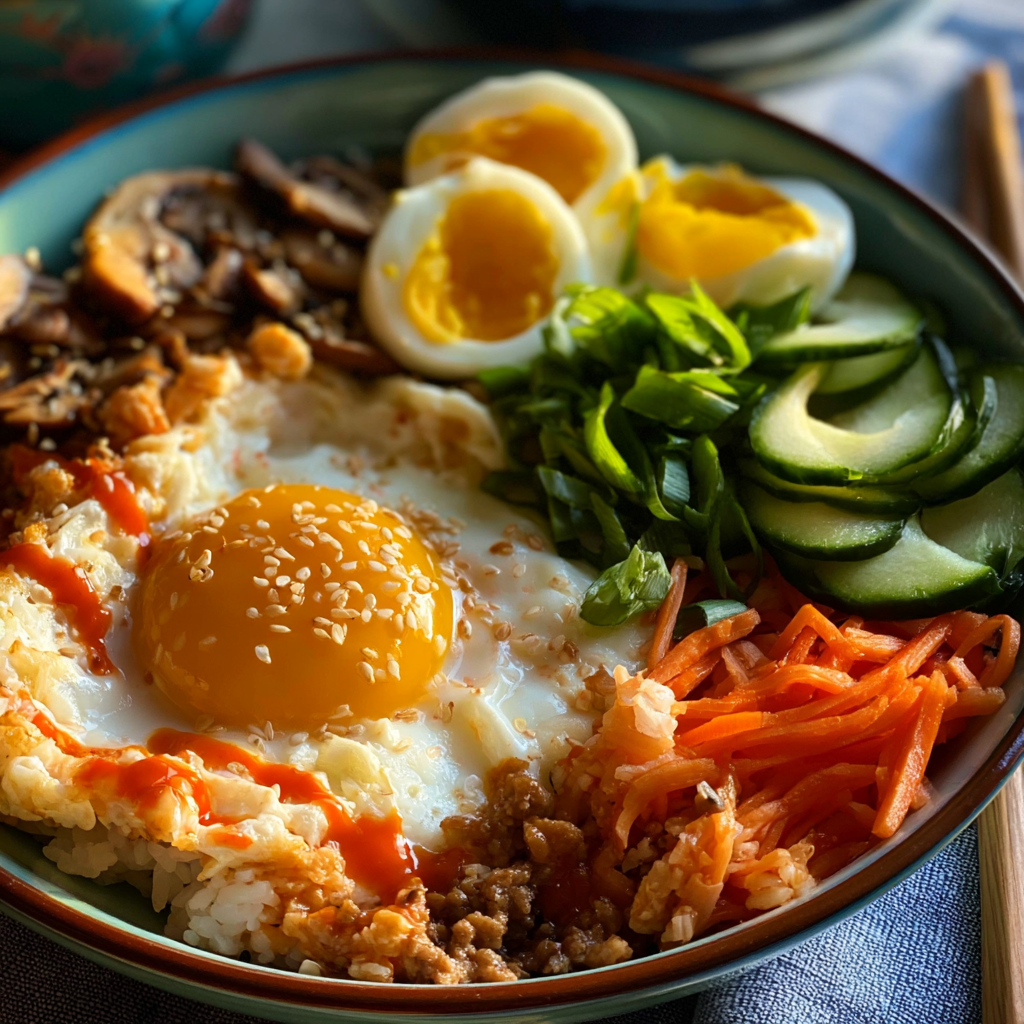
If you’re craving a wholesome, vibrant, and utterly delicious meal, look no further than this Easy Korean Bibimbap Recipe. This classic Korean dish brings together a colorful mix of fresh veggies, savory proteins, and perfectly seasoned rice, all topped with a spicy-sweet gochujang sauce. It’s simple to prepare, packed with nutrients, and offers an explosion of flavors and textures that make every bite a delight. Whether you’re new to Korean cuisine or a seasoned fan, this Easy Korean Bibimbap Recipe is guaranteed to brighten up your dinner table with ease and excitement.
Why You’ll Love This Recipe
- Vibrant flavors all in one bowl: The combination of fresh vegetables, seasoned meat, and spicy sauce creates a balanced and exciting taste.
- Quick and straightforward: This recipe is designed to get you cooking in no time without the fuss of complicated steps or hard-to-find ingredients.
- Highly nutritious and balanced: Packed with vegetables, protein, and rice, it’s a meal that satisfies both your hunger and your health goals.
- Customizable and flexible: Easily adjust veggies or protein choices to fit your dietary needs or preferences.
- One-bowl wonder: Minimal clean-up and maximum flavor make it perfect for busy weeknights.
Ingredients You’ll Need
The magic behind this Easy Korean Bibimbap Recipe is in its simple, wholesome ingredients. Each adds unique texture and flavor—from the crisp veggies to the savory meat and sticky rice—creating a harmonious dish you’ll want to eat again and again.
- Rice: Use short-grain white or brown rice for a sticky, perfect base that holds everything together.
- Vegetables: Carrots, spinach, bean sprouts, zucchini, and mushrooms add vibrant colors and fresh, varied textures.
- Protein: Ground beef or tofu are great choices, seasoned well to complement the other ingredients.
- Egg: Typically a fried sunny-side-up egg, adding richness and a lovely creamy yolk.
- Gochujang sauce: This Korean fermented chili paste adds spice, sweetness, and depth to bring all the flavors alive.
- Sesame oil: Just a drizzle adds a nutty aroma that enhances the dish’s authentic Korean taste.
- Sesame seeds: Sprinkled on top for a toasty crunch and visual appeal.
- Soy sauce and garlic: For seasoning the meat and vegetables, adding umami and savory notes.
Variations for Easy Korean Bibimbap Recipe
One of the best things about this Easy Korean Bibimbap Recipe is how adaptable it is! Feel free to swap ingredients based on what’s in your fridge or your dietary goals; it’s all about making this vibrant bowl your own.
- Vegetarian version: Skip the meat and add extra tofu or tempeh, seasoned and pan-fried until golden.
- Vegan option: Replace the egg with sautéed mushrooms or avocado slices for creaminess.
- Spicy levels: Adjust the gochujang amount or mix in chili flakes for mild to fiery heat.
- Grain alternatives: Use quinoa or cauliflower rice for a low-carb twist while keeping the texture interesting.
- Protein swaps: Try grilled chicken, shrimp, or even a mix of beans for different flavors and textures.
How to Make Easy Korean Bibimbap Recipe
Step 1: Prepare the Rice
Start by cooking your chosen rice according to package instructions until tender and fluffy. This sticky rice will be the comforting base that holds together all the flavors and toppings.
Step 2: Prepare the Vegetables
Wash and julienne your carrots and zucchini. Lightly sauté them separately in a bit of sesame oil with a pinch of salt until just tender but still vibrant. Quickly blanch the spinach and bean sprouts, then gently squeeze out excess water and season with a bit of garlic salt or soy sauce. For mushrooms, slice and sauté until golden brown to bring out their rich flavor.
Step 3: Cook the Protein
In a skillet, cook ground beef or tofu with minced garlic, soy sauce, and a splash of sesame oil until browned and flavorful. This adds a savory depth that pairs perfectly with the fresh vegetables.
Step 4: Fry the Egg
Fry a sunny-side-up egg in a little oil until the white is set but the yolk remains runny, providing creamy richness when mixed in later.
Step 5: Assemble Your Bibimbap
In a large bowl, layer the cooked rice as the base. Arrange the sautéed vegetables and protein attractively on top in sections. Place the fried egg in the center and add a generous spoonful of gochujang sauce. Finish with a drizzle of sesame oil and a sprinkle of toasted sesame seeds.
Step 6: Mix and Enjoy
Before eating, mix all the ingredients thoroughly so the sauce coats every bite. The combination of textures and flavors is what makes bibimbap such a joy to eat!
Pro Tips for Making Easy Korean Bibimbap Recipe
- Prep veggies separately: Cooking vegetables individually preserves their distinct flavors and textures.
- Use fresh sesame oil: Adds an authentic aroma that’s key to delicious bibimbap.
- Adjust gochujang to taste: Always start with less and add more to avoid overpowering the dish.
- Cook rice perfectly: Slightly sticky rice keeps the bowl cohesive and easy to mix.
- Presentation matters: Arrange ingredients neatly before mixing for Instagram-worthy bowls.
- Experiment with toppings: Feel free to add kimchi or seaweed flakes for extra flavor layers.
How to Serve Easy Korean Bibimbap Recipe
Garnishes
Top your bibimbap with extra toasted sesame seeds and chopped scallions for added brightness. A few thin strips of dried seaweed (gim) also make a flavorful, crunchy garnish that elevates the authenticity and appearance.
Side Dishes
Bibimbap pairs wonderfully with Korean side dishes like kimchi, pickled radish, or a light cucumber salad. These add contrast and freshness to accompany the hearty flavors.
Creative Ways to Present
For a fun twist, serve your bibimbap in individual stone bowls (dolsot) which crisp the rice at the bottom, adding a delightful texture. You can also offer the components separately for guests to assemble their own bowls, making it an interactive and memorable meal.
Make Ahead and Storage
Storing Leftovers
Keep leftover bibimbap components in separate airtight containers for up to 3 days in the refrigerator to maintain freshness and texture. Avoid mixing the sauce right away to keep veggies crisp.
Freezing
While bibimbap is best fresh, you can freeze cooked rice and meat separately. Freeze in portions with airtight packaging for up to 2 months. Vegetables won’t freeze well, so prepare fresh or blanch in advance.
Reheating
Reheat rice and meat gently in the microwave or on the stove with a splash of water to prevent drying. Sauté fresh or leftover veggies quickly to revive their texture, then add the egg last to keep it tender.
FAQs
What is bibimbap?
Bibimbap is a classic Korean mixed rice dish that features a colorful blend of vegetables, protein, rice, and a spicy-sweet sauce, traditionally topped with a fried egg.
Can I make bibimbap vegetarian or vegan?
Absolutely! Swap meat for tofu or mushrooms and omit the egg or replace it with vegan alternatives to create a delicious plant-based bibimbap.
What type of rice should I use?
Short-grain white or brown rice works best because it’s sticky enough to hold the ingredients together and soak up the sauce.
How spicy is bibimbap?
The heat depends on how much gochujang you add. You can adjust the spicy level from mild to fiery based on your preference.
Can I prepare parts of this recipe in advance?
Yes! Vegetables and protein can be cooked ahead of time and stored separately, making it easy to assemble a fresh bibimbap quickly.
Final Thoughts
This Easy Korean Bibimbap Recipe is a celebration of vibrant tastes, textures, and colors wrapped in a simple, nutritious meal you can whip up anytime. Sharing this bowl of goodness with family or friends is like sharing a piece of Korean culture filled with warmth and flavor. Try it today—you’ll wonder how you ever lived without its comforting magic in your kitchen!
Related Posts
- Garlic Bread Rolls
- Buttermilk Fried Chicken Is Irresistible
- Easy Fiesta Lime Chicken with Avocado Recipe

Easy Korean Bibimbap Recipe
- Total Time: 35 minutes
- Yield: 2 servings 1x
- Diet: Gluten Free
Description
Easy Korean Bibimbap is a wholesome and vibrant dish combining seasoned rice, fresh sautéed vegetables, savory protein, a fried egg, and spicy-sweet gochujang sauce. This classic Korean mixed rice bowl is quick to prepare, highly nutritious, and customizable to fit various dietary preferences, delivering an exciting explosion of flavors and textures in every bite.
Ingredients
Rice
- 1 cup short-grain white or brown rice
Vegetables
- 1 medium carrot, julienned
- 1 small zucchini, julienned
- 2 cups fresh spinach
- 1 cup bean sprouts
- 1 cup mushrooms, sliced
Protein
- 250g ground beef or firm tofu
- 2 cloves garlic, minced
- 1 tbsp soy sauce
- 1 tsp sesame oil (for cooking)
Other Ingredients
- 2 eggs (fried sunny-side-up)
- 2 tbsp gochujang (Korean chili paste)
- 1 tbsp sesame oil (for drizzling)
- 1 tbsp toasted sesame seeds
- Soy sauce and garlic salt (to season vegetables)
- Oil for frying (vegetables and eggs)
Instructions
- Prepare the Rice: Cook the short-grain white or brown rice according to package instructions until tender and fluffy. This sticky rice will serve as the comforting base to hold all the flavors and toppings together.
- Prepare the Vegetables: Wash and julienne the carrots and zucchini. Sauté each separately in a bit of sesame oil with a pinch of salt until just tender but still vibrant in color. Quickly blanch the spinach and bean sprouts, then gently squeeze out excess water and season with garlic salt or soy sauce to taste. Slice the mushrooms and sauté in a little oil until golden brown to enhance their rich flavor.
- Cook the Protein: In a skillet, cook the ground beef or tofu with the minced garlic, soy sauce, and a splash of sesame oil until browned and flavorful. This adds savory depth that complements the fresh vegetables perfectly.
- Fry the Egg: Fry a sunny-side-up egg in a small amount of oil over medium heat until the whites are set but the yolk remains runny, providing creamy richness when mixed into the bowl later.
- Assemble Your Bibimbap: In a large bowl, layer the cooked rice as the base. Arrange the sautéed vegetables and cooked protein attractively on top in separate sections. Place the fried egg in the center and add a generous spoonful of gochujang sauce. Finish with a drizzle of sesame oil and a sprinkle of toasted sesame seeds.
- Mix and Enjoy: Before eating, mix all the ingredients thoroughly so the gochujang sauce coats every bite. The combination of textures and flavors is what makes bibimbap such a joyful and delicious experience.
Notes
- Prep vegetables separately to preserve their distinct flavors and textures.
- Use fresh sesame oil to add authentic aroma to the dish.
- Adjust gochujang amount according to your spice tolerance, starting with less and adding more as needed.
- Cook rice until slightly sticky to keep the bowl cohesive and easy to mix.
- Arrange ingredients neatly before mixing for an appealing presentation.
- Feel free to experiment with additional toppings like kimchi or dried seaweed flakes for extra flavor.
- Prep Time: 15 minutes
- Cook Time: 20 minutes
- Category: Main Course
- Method: Stovetop
- Cuisine: Korean
Nutrition
- Serving Size: 1 bowl
- Calories: 520 kcal
- Sugar: 4 g
- Sodium: 800 mg
- Fat: 18 g
- Saturated Fat: 4 g
- Unsaturated Fat: 12 g
- Trans Fat: 0 g
- Carbohydrates: 65 g
- Fiber: 6 g
- Protein: 22 g
- Cholesterol: 185 mg
Keywords: bibimbap, korean rice bowl, gochujang, easy korean recipe, korean vegetable rice bowl, healthy korean food, mixed rice bowl