
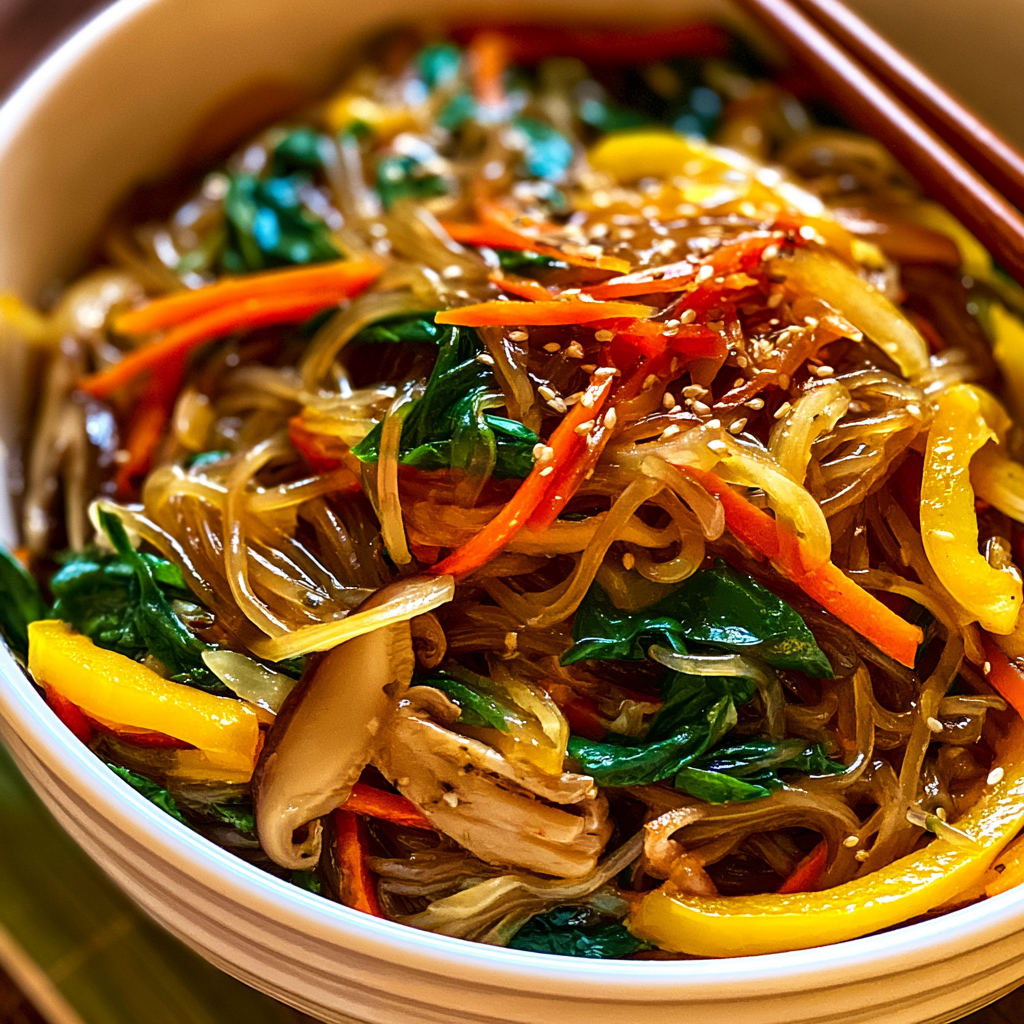
If you’re craving a vibrant and delicious Korean meal that comes together in no time, this Easy Japchae RecipeEasy Japchae Recipe is exactly what you need. Japchae is a stir-fried glass noodle dish bursting with color, texture, and flavor, and this quick version captures all its magic without the fuss. Whether you’re a busy weeknight cook or simply eager to explore Korean cuisine, this recipe delivers a simple, speedy way to enjoy an authentic taste that feels special every single time.
Why You’ll Love This Recipe
- Quick and Effortless: Ready in under 30 minutes, perfect when you want something homemade without the wait.
- Vibrant and Flavorful: A colorful mix of veggies, sweet-savory sauce, and tender noodles create an irresistible harmony.
- Flexible Ingredients: Easily customize to your preference or pantry supplies without losing that delicious Japchae essence.
- Nutritious Comfort: Packed with wholesome veggies and protein options, it satisfies both taste buds and nutrition goals.
- Great for All Meals: Works as a main dish, side, or even a picnic favorite making it wonderfully versatile.
Ingredients You’ll Need
Gathering simple yet essential ingredients is the key to nailing this Easy Japchae RecipeEasy Japchae Recipe. Each one plays a distinct role in building the dish’s savory-sweet balance, silky texture, and colorful appeal.
- Korean Sweet Potato Starch Noodles (Dangmyeon): These glass noodles are the star, offering a chewy texture that soaks up flavors beautifully.
- Soy Sauce: Brings depth and umami to the sauce, balancing sweetness perfectly.
- Sesame Oil: Adds a toasted, nutty aroma that makes Japchae so unique and inviting.
- Sugar or Honey: Provides a gentle sweetness to enrich the sauce and round out the flavor.
- Spinach: A fresh leafy touch for vibrant green color and a tender bite.
- Carrots: Thinly sliced for sweetness and crunch, adding bright orange contrast.
- Onions: Slightly caramelized onions offer a mild sweetness and juicy texture.
- Mushrooms (Shiitake or Button): Earthy mushrooms add savory depth and meaty texture.
- Garlic: Infuses a gentle pungency that layers well with the other seasonings.
- Egg: Optional but recommended for protein and a golden decorative finish.
- Beef or Tofu: Thinly sliced beef or firm tofu cubes provide heartiness and enhance umami.
- Green Onions and Sesame Seeds: For garnish and an extra pop of flavor.
Variations for Easy Japchae RecipeEasy Japchae Recipe
One of the best things about this Easy Japchae RecipeEasy Japchae Recipe is how adaptable it is. Feel free to mix and match ingredients or tweak flavors to suit your tastes, dietary needs, or available pantry items.
- Vegetarian Version: Swap beef with extra tofu and more mushrooms for a plant-powered twist.
- Spicy Kick: Add gochujang or red pepper flakes to the sauce for a vibrant heat boost.
- Seafood Addition: Toss in shrimp or thinly sliced squid for a seafood-inspired Japchae.
- Different Noodles: Substitute glass noodles with zucchini noodles or even whole wheat pasta in a pinch.
- Low-Sodium Sauce: Use low-sodium soy sauce and reduce added sugar for a lighter, heart-healthy option.
How to Make Easy Japchae RecipeEasy Japchae Recipe
Step 1: Prepare the Noodles
Start by boiling the Korean sweet potato starch noodles according to package directions, usually around 6-7 minutes. Once soft and translucent, drain and rinse under cold water to stop cooking. Toss the noodles lightly with sesame oil to prevent sticking and set aside.
Step 2: Sauté the Vegetables and Protein
Heat a skillet over medium-high heat and add a splash of oil. Cook sliced beef or tofu until browned, then remove and keep warm. In the same pan, stir-fry garlic, onions, mushrooms, carrots, and spinach separately or all together until tender but still vibrant—this locks in their natural sweetness and texture.
Step 3: Whisk and Cook the Egg
Beat the egg with a pinch of salt, then pour into a lightly oiled pan to make a thin omelet. Once cooked, roll and slice it thinly into ribbons for garnish and added texture.
Step 4: Mix Sauce Ingredients
Combine soy sauce, sugar (or honey), and sesame oil in a small bowl until the sugar dissolves fully. This simple sauce balances savory and sweet notes vital to Japchae.
Step 5: Combine and Toss
Return the noodles to the skillet and pour the sauce over them. Add back the cooked veggies, meat or tofu, and gently toss everything together over low heat until evenly coated and heated through.
Step 6: Garnish and Serve
Transfer the Japchae to a serving plate, sprinkle with green onions, sesame seeds, and top with egg strips. Serve warm and enjoy the symphony of flavors!
Pro Tips for Making Easy Japchae RecipeEasy Japchae Recipe
- Precook Separately: Cook each vegetable separately to maintain crisp texture and vibrant colors.
- Use Room Temperature Noodles: Toss cold noodles with sesame oil immediately after draining to keep them from clumping.
- Balance the Sauce: Adjust sweetness and saltiness by tasting the sauce before mixing—each soy sauce brand varies.
- Thin Slicing: Keep meat and vegetables thinly sliced for quick cooking and even flavor absorption.
- Don’t Overcook: Japchae should be tender but not mushy; remove from heat as soon as everything is combined.
How to Serve Easy Japchae RecipeEasy Japchae Recipe
Garnishes
Sprinkle toasted sesame seeds and finely sliced green onions for a fresh bite and visual appeal. A light drizzle of additional toasted sesame oil right before serving enhances aroma.
Side Dishes
Pair with classic Korean sides like kimchi, pickled radish, or steamed rice to create a well-rounded meal that complements Japchae’s flavors and textures.
Creative Ways to Present
Serve Japchae in lettuce wraps for a fun handheld option or pile it over a bed of steamed rice or quinoa for a nutritious bowl-style presentation.
Make Ahead and Storage
Storing Leftovers
Keep leftover Japchae in an airtight container in the fridge for up to 3 days. It tastes great cold or reheated, making it perfect for quick lunches.
Freezing
Japchae can be frozen for up to 1 month. Place portions in freezer-safe containers or bags. For best texture, thaw overnight in the fridge before reheating gently.
Reheating
Warm Japchae in a skillet over medium-low heat, adding a splash of water or broth to prevent sticking. Avoid microwaving too long to maintain noodle texture.
FAQs
Can I use any noodles for Japchae?
Traditional Japchae uses Korean sweet potato starch glass noodles, which have a unique chewy texture, but you can substitute zucchini noodles or even spaghetti in a pinch.
Is Japchae gluten-free?
Japchae is naturally gluten-free if you use gluten-free soy sauce and authentic sweet potato noodles; just check ingredient labels carefully.
Can I make Japchae vegan?
Absolutely! Omit the beef and egg, and add extra tofu or mushrooms for a fully delicious vegan version.
How long does Japchae keep in the fridge?
Stored properly in an airtight container, Japchae stays fresh for up to 3 days and is perfect for meal prep.
What’s the best way to reheat leftover Japchae?
Gently reheat it in a skillet with a splash of water or broth over low heat to keep noodles tender and flavorful without drying out.
Final Thoughts
Give this Easy Japchae RecipeEasy Japchae Recipe a try and experience how simple ingredients come together to create a stunning meal. It’s perfect for busy days when you want to enjoy a wholesome, authentic Korean dish without a fuss. Once you taste its wonderful mix of textures and flavors, Japchae will surely become a go-to favorite in your cooking repertoire.
Related Posts
- Garlic Bread Rolls
- Buttermilk Fried Chicken Is Irresistible
- Easy Fiesta Lime Chicken with Avocado Recipe

Easy Japchae RecipeEasy Japchae Recipe
- Total Time: 25 minutes
- Yield: 4 servings 1x
- Diet: Gluten Free
Description
This Easy Japchae recipe is a vibrant and flavorful Korean stir-fried glass noodle dish that comes together in under 30 minutes. Featuring chewy sweet potato starch noodles tossed with a savory-sweet sauce, colorful vegetables, and your choice of protein, it’s a nutritious and versatile meal perfect for busy weeknights or casual gatherings.
Ingredients
Noodles
- 200g Korean sweet potato starch noodles (Dangmyeon)
Sauce
- 3 tablespoons soy sauce
- 1 tablespoon sugar or honey
- 1 tablespoon sesame oil, plus more for tossing noodles
Vegetables
- 1 cup fresh spinach
- 1 medium carrot, thinly sliced
- 1 small onion, thinly sliced
- 1 cup mushrooms (shiitake or button), sliced
- 2 cloves garlic, minced
Protein
- 100g thinly sliced beef or 150g firm tofu, cubed
- 1 egg (optional)
Garnish
- 2 green onions, finely sliced
- 1 tablespoon toasted sesame seeds
Instructions
- Prepare the Noodles: Boil the Korean sweet potato starch noodles according to package instructions, typically 6-7 minutes, until soft and translucent. Drain and rinse under cold water to stop cooking. Toss immediately with a little sesame oil to prevent sticking and set aside.
- Sauté the Vegetables and Protein: Heat a splash of oil in a skillet over medium-high heat. Cook the sliced beef or tofu until browned, then remove and keep warm. Using the same pan, stir-fry garlic, onions, mushrooms, carrots, and spinach, either separately or together, until tender but still vibrant, preserving their natural sweetness and texture.
- Whisk and Cook the Egg: Beat the egg with a pinch of salt. Pour into a lightly oiled pan to make a thin omelet. Once cooked, roll and slice into thin ribbons for garnish and added texture.
- Mix Sauce Ingredients: In a small bowl, combine soy sauce, sugar (or honey), and sesame oil until the sugar dissolves completely. This sauce provides the balance of savory and sweet flavors essential for Japchae.
- Combine and Toss: Return the noodles to the skillet and pour the sauce over them. Add back the cooked vegetables and protein, then gently toss over low heat until everything is evenly coated and warmed through.
- Garnish and Serve: Transfer the Japchae to a serving dish. Sprinkle with sliced green onions, toasted sesame seeds, and top with the egg ribbons. Serve warm and enjoy the harmonious flavors.
Notes
- Cook vegetables separately to maintain their crisp texture and vibrant color.
- Toss noodles with sesame oil immediately after draining to keep them from sticking together.
- Adjust the sauce’s sweetness and saltiness by tasting before mixing to suit your preference.
- Keep meat and vegetables thinly sliced for quick cooking and even flavor absorption.
- Avoid overcooking — Japchae should be tender but not mushy; remove from heat as soon as mixed.
- Prep Time: 10 minutes
- Cook Time: 15 minutes
- Category: Main Course
- Method: Stir-fry
- Cuisine: Korean
Nutrition
- Serving Size: 1 cup
- Calories: 250
- Sugar: 6g
- Sodium: 600mg
- Fat: 7g
- Saturated Fat: 1.5g
- Unsaturated Fat: 5g
- Trans Fat: 0g
- Carbohydrates: 38g
- Fiber: 3g
- Protein: 8g
- Cholesterol: 35mg
Keywords: Japchae, Korean glass noodles, stir-fry, sweet potato noodles, easy Korean recipe, gluten-free Korean dish, quick dinner, healthy noodle stir-fry